
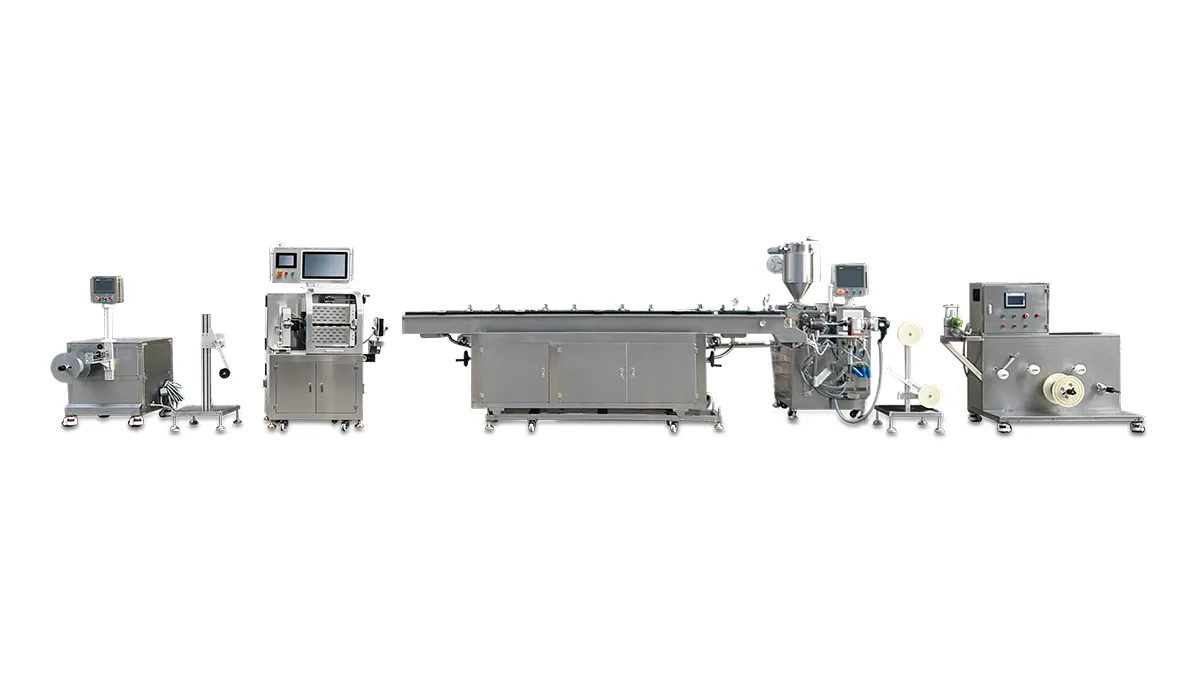
Multi-layer medical tubing extrusion lines produce composite catheter shafts for interventional and angiographic procedures. The catheter core is drawn from the tension-controlled unwinder, passes through a stainless-steel straightener, and then enters the coextrusion die, in which the inner, outer and intermediate polymer layers are produced. The tube is then cooled in a stainless-steel water tank and afterwards goes through online diameter measurement systems that measure its internal and external diameters before reaching the cutting or winding unit.
Materials Processed
Medical-grade PA, PEBAX, TPU, and other polymers suitable for multilayer catheter tubing
Finished Product Samples
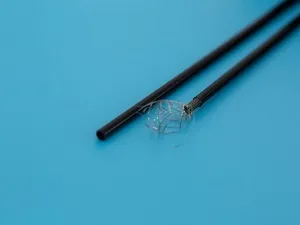 Braided PEBAX Catheter Tubing
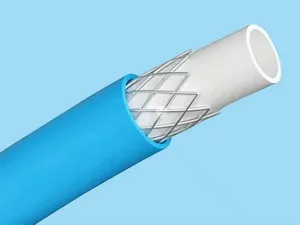 Angiographic Catheters
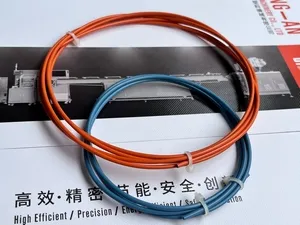 Coil Reinforced Catheter Tubing
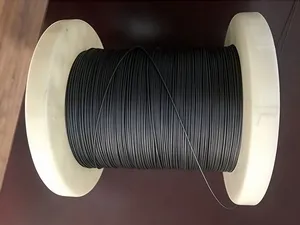 Hydrophilic Guidewires
Common Applications
| Extrusion Line Configuration | Medical Device Applications | Materials Processed |
| Precision Extrusion Line for Braided Angiographic Catheters | · Cardiovascular and neurovascular angiography catheters · Microcatheters · Guiding catheter assemblies |
PEBAX, PA (nylon), TPU |
| Variable-Diameter Guidewire Coating Extrusion Line | · Hydrophilic guidewires Zebra guidewires | TPU, PA |
| Coil-Reinforced Tubing Extrusion Line | · Ureteral access sheaths Neurovascular guiding sheaths | TPU, PEBAX |
| TPU-Coated Tubing Extrusion Line for Endoscopes | · Gastrointestinal and respiratory endoscope insertion tubes · Biopsy forceps channel tubing · Multi-lumen endoscope tubing |
TPU, PA |
Technical Specifications
Reference specifications for the 25 mm angiographic catheter extrusion line
| Screw Diameter | Screw L/D Ratio | Screw Speed | Drive Power | Capacity | Overall Line Dimensions (L × W × H) | Finished Tubing Diameter |
| Ø25 mm | Ø25 × 28D | 55 rpm | 7.5 kW | 10 kg/h | 12500 × 2400 × 1950 mm | 0.3–3.0 mm |
Features
- These multilayer medical tubing extrusion lines combine a precision extruder and die head with servo haul-off and inline diameter and wall thickness measurement to maintain the required outer/inner diameter, wall thickness, and concentricity.
- Several extruders can work with multilayer or coating die heads and tension controls to process different types of polymers, build multiple layers, or apply polymer coatings over metal cores.
- Equipped with an overcoating die that spreads the molten polymer evenly around the metal core, and maintains stable tubing dimensions, uniform wall thickness, and good concentricity. Preheating the core wire improves both physical adhesion and chemical bonding between the polymer and metal.
- The molten polymer is fed at a steady rate while monitoring its pressure and temperature in real time, then automatically adjust the extrusion output and haul-off speed to reduce dimensional variation and keep the coating thickness uniform and within tolerance.
- For products that need coating and sheathing, the core is accurately positioned and held at a steady tension as it passes through the precision die head. Then synchronized cooling stabilizes the new layer and reduces off-center or incomplete coating, delamination, and uneven wall thickness.
Main Components
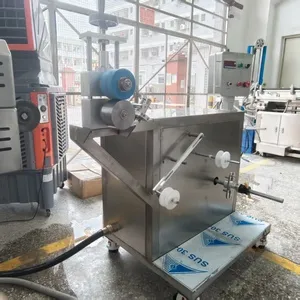 Payoff Stand
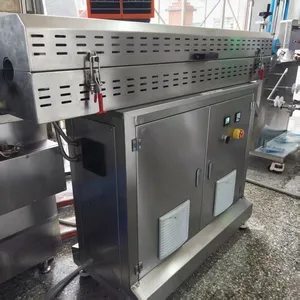
 Stainless-Steel Preheating Oven
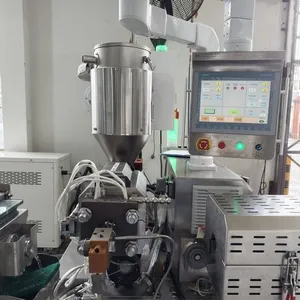
 Precision Single-Screw Extruder
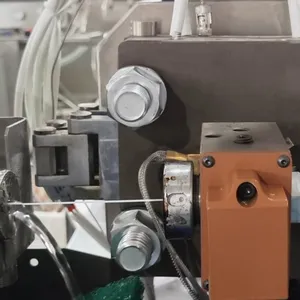 Guidewire Overcoating Die
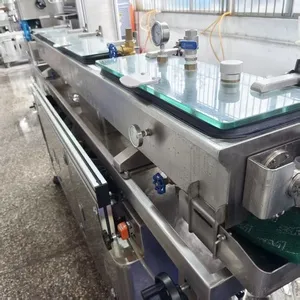 Stainless-Steel Sizing and Cooling Tank
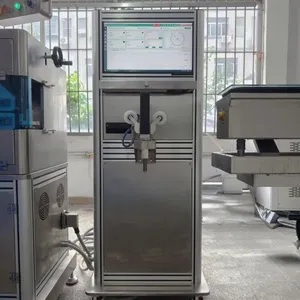 Internal/External Diameter Measurement System
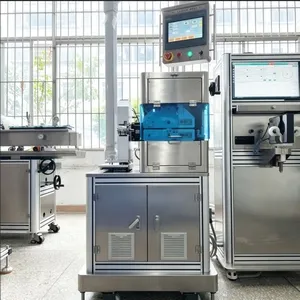 Haul-Off and Cutting Unit
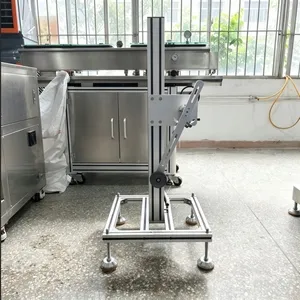 Tension Control Unit
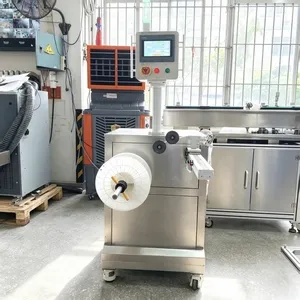 Single-Station Winder